Jakob Schmitz · 3 October 2026
Symbiotic Organisms Reshaping Rock Temperatures in Elevated Coastal Vapor Zones
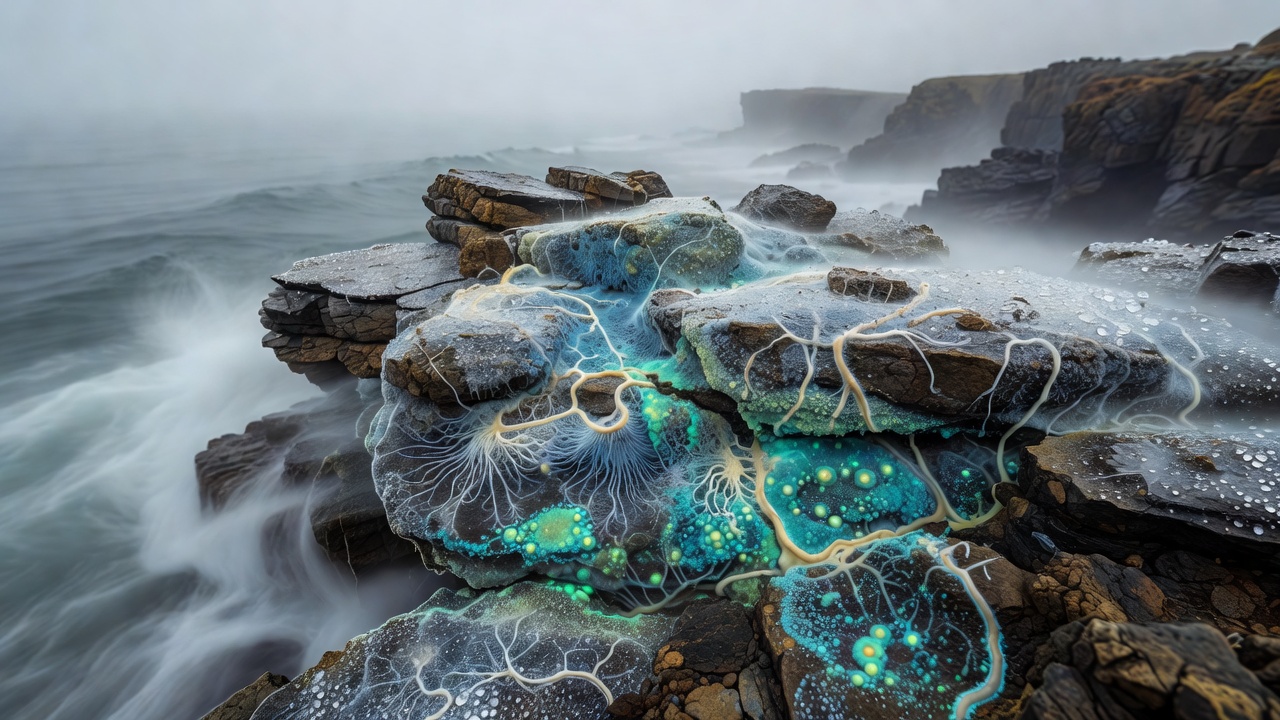
Coastal highlands with persistent vapor create environments where symbiotic organisms such as lichens and associated microbial communities establish long-term presence on rock surfaces, and researchers document gradual adaptations that influence thermal properties over multiple decades. These partnerships between fungi and algae or cyanobacteria allow survival in high-moisture settings where direct sunlight alternates with dense mist, while the organisms modify surface albedo and moisture retention in measurable ways.
Adaptation Patterns Across Decades
Studies of elevated coastal zones show that symbiotic colonies thicken and diversify their pigment layers when exposed to chronic vapor, which alters light absorption and heat dissipation rates on underlying rock. Data collected over thirty-year spans indicate that initial colonization phases give way to stable mats whose structure traps thin water films during fog events, and this retained moisture conducts heat differently than bare stone. Observers note that certain lichen species extend their thalli deeper into micro-cracks, a process that expands the contact area between organism and substrate while simultaneously insulating the rock from rapid temperature swings.
Monitoring stations in several regions record that these adaptations accelerate during periods of increased vapor density, yet the organisms maintain metabolic activity even when temperatures drop below typical thresholds for exposed rock. Evidence from repeated surveys reveals shifts in community composition where older colonies give way to variants better suited to sustained humidity, and these transitions correlate with small but consistent changes in surface temperature readings.
Thermal Effects on Rock Surfaces
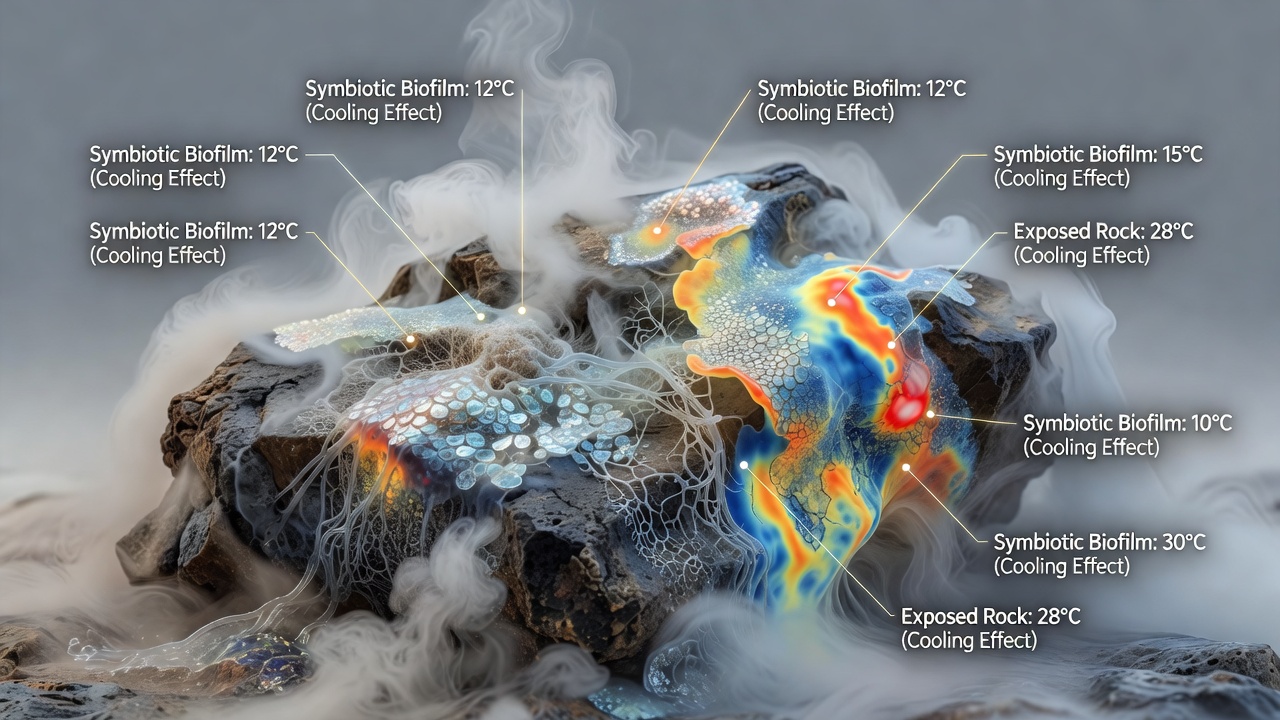
Long-term measurements demonstrate that rock surfaces hosting dense symbiotic growth maintain temperatures several degrees lower during daytime peaks compared with adjacent bare areas, while nighttime cooling slows because the biological layer holds residual warmth. Researchers attribute part of this buffering to changes in albedo, since pigmented layers reflect or absorb specific wavelengths differently than mineral surfaces alone. Over decades the cumulative effect appears in data sets showing reduced thermal expansion and contraction cycles, which in turn influences weathering rates on the same rock faces.
Instrumentation placed at multiple elevations records that the temperature differential grows as the symbiotic cover matures, reaching measurable stability after roughly fifteen to twenty years of continuous presence. This pattern holds across different rock types, although the magnitude varies with mineral composition and exposure angle to prevailing vapor flows.
Regional Observations and Data Collection
Programs operating in Pacific and Atlantic coastal highlands have compiled temperature logs that span from the late twentieth century into the present, and these records allow comparison of sites with and without established symbiotic communities. One ongoing project coordinated through the National Oceanic and Atmospheric Administration includes sensors embedded directly beneath lichen mats, providing direct evidence of reduced heat flux into the rock substrate. Similar efforts in European mountain ranges near sea level document parallel trends, confirming that the phenomenon occurs across geographic zones with comparable vapor regimes.
As of October 2026, expanded sensor networks continue to log incremental changes, and preliminary cross-site analyses suggest that the rate of temperature moderation stabilizes once the symbiotic layer reaches a certain biomass threshold. Additional data from Australian coastal research stations reinforce the same sequence: colonization, structural development, and measurable thermal buffering over multi-decade timescales.
Interactions with Surrounding Conditions
Vapor-heavy environments supply both water and nutrients that support symbiotic metabolism, while the organisms themselves modify local microclimates by slowing evaporation from rock pores. This feedback loop sustains colony expansion even as broader climate patterns fluctuate, and long-term records show that established sites resist short-term drying events more effectively than newly colonized surfaces. Field teams report that wind-driven mist delivers salts and minerals that become incorporated into the biological matrix, further altering surface chemistry and heat capacity.
Comparisons between protected and exposed slopes indicate that shelter from direct wind allows thicker growth and correspondingly stronger temperature moderation, yet the overall pattern remains consistent once colonies achieve multi-year continuity. These observations align with findings from university-led studies that model heat transfer through layered biological-mineral interfaces over extended periods.
Conclusion
Decades of field data establish that symbiotic organisms in elevated coastal vapor zones undergo structural adaptations that produce measurable effects on rock surface temperatures. The process unfolds gradually, with community development and thermal buffering reinforcing each other across successive years. Continued monitoring through 2026 and beyond will clarify whether these localized patterns scale to broader landscape changes under varying vapor regimes.