Logan Becker · 17 October 2026
Lichen-Mediated Carbon Sequestration Dynamics in Recurrent Vapor Belts of Temperate Highlands
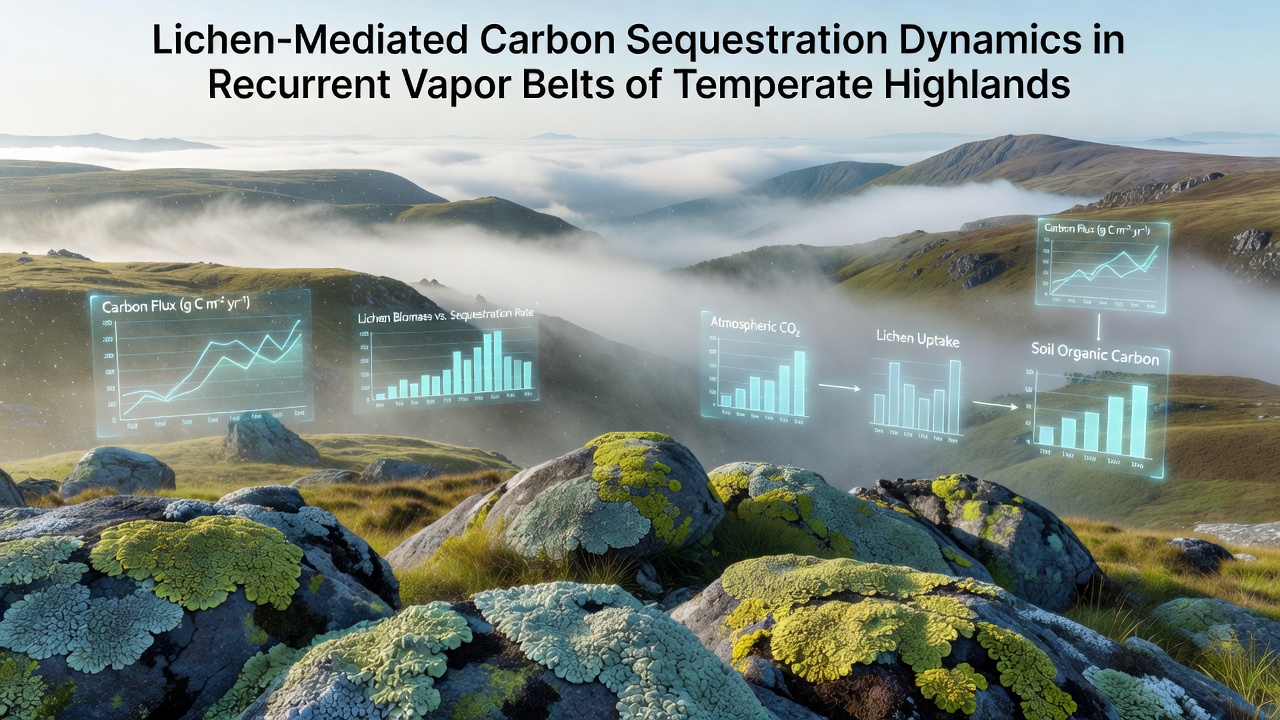
Recurrent vapor belts form in temperate highlands when cool air masses interact with elevated terrain, and these zones create consistent moisture gradients that support lichen communities. Researchers have tracked how lichens in such belts fix atmospheric carbon through photosynthesis while the surrounding humidity modulates respiration rates and growth cycles. Data from monitoring networks show seasonal peaks in carbon uptake that align with vapor belt persistence rather than rainfall alone.
Formation and Characteristics of Vapor Belts
Temperate highland regions experience vapor belt development when temperature inversions trap moisture at specific elevations, and this leads to repeated cycles of condensation on rock surfaces and vegetation. Observers note that these belts differ from lowland fog because they recur daily or weekly due to orographic lift, which maintains higher relative humidity levels even during drier months. Studies conducted across multiple mountain ranges indicate that belt thickness and duration vary with wind patterns and slope aspect, creating microhabitats where lichens encounter alternating wet and drying conditions.
Geographic mapping efforts reveal vapor belts concentrated between 800 and 1800 meters in many temperate zones, while substrate type further influences how long moisture remains available. Researchers have observed that basalt and granite outcrops retain condensation longer than sedimentary rocks, extending the active period for lichen metabolic processes. This extended activity window contributes directly to measurable carbon accumulation in lichen biomass and associated soil layers.
Carbon Fixation Mechanisms in Lichen Symbionts
Lichens sequester carbon through the photosynthetic activity of their algal or cyanobacterial partners, and the fungal component provides structural support that protects these photobionts from desiccation during vapor belt fluctuations. Measurements indicate that net carbon fixation rates increase when relative humidity stays above 80 percent for consecutive hours, conditions frequently met inside recurrent vapor belts. Enzyme activity within lichen thalli responds to these moisture pulses by accelerating CO2 assimilation during the day and slowing nighttime respiration when temperatures drop.
Isotope tracing experiments have confirmed that carbon fixed during vapor belt events transfers into lichen secondary compounds and eventually into surrounding organic matter. Those who have studied highland transects report higher concentrations of fixed carbon in soils downslope from vapor belt zones compared with adjacent drier ridges. This pattern suggests lateral movement of organic material through runoff and gravity, expanding the spatial footprint of sequestration beyond the immediate lichen colonies.
Recent Field Observations and Data Trends
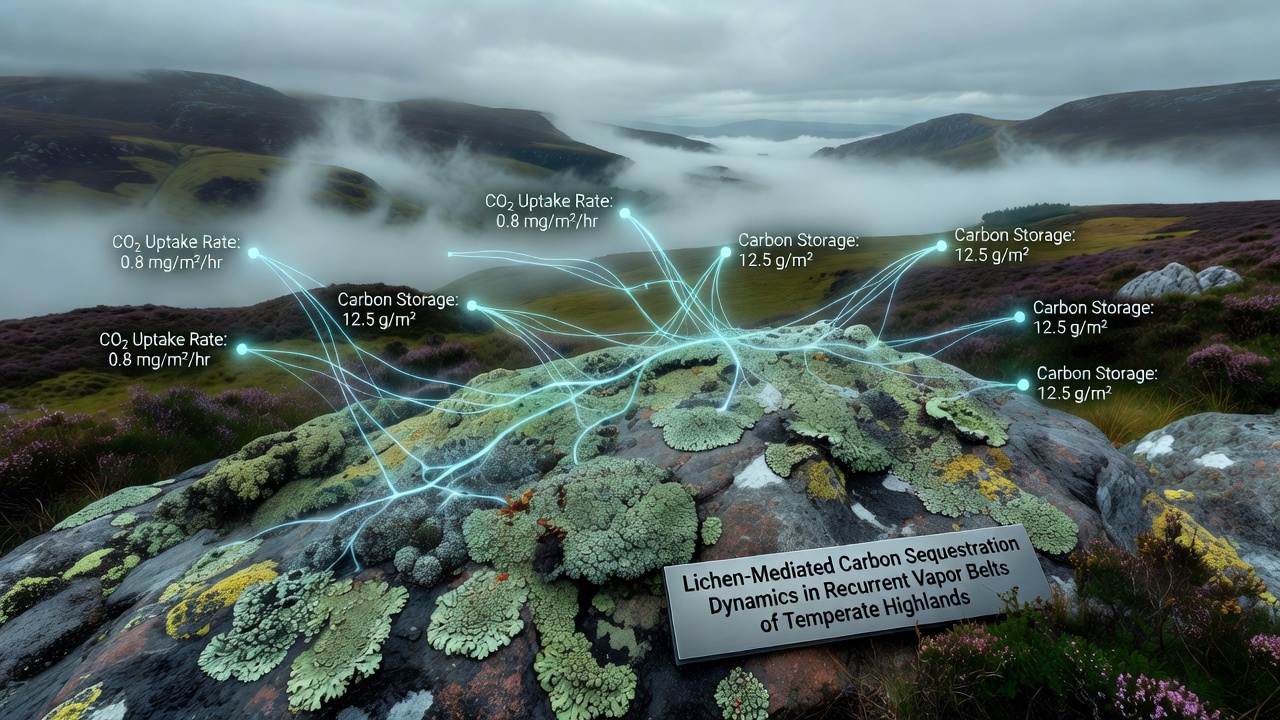
Monitoring stations installed in the European Alps and the Appalachian highlands have recorded continuous data since the early 2020s, and October 2026 updates from these networks showed elevated carbon sequestration during an unusually persistent vapor belt season. Analysts attribute the increase to stable atmospheric patterns that prolonged belt formation by several days each week. Comparable observations from sites in New Zealand's South Island confirm similar responses when vapor belts coincide with moderate temperatures.
Researchers have noted that certain lichen species, particularly those with cyanobacterial partners, exhibit greater resilience to the drying intervals between vapor events. These species maintain higher baseline photosynthetic efficiency, allowing quicker recovery once moisture returns. Long-term records indicate that areas with frequent vapor belt recurrence store approximately 15 to 25 percent more organic carbon in surface layers than comparable sites without such belts.
Influencing Environmental Variables
Temperature gradients within vapor belts affect enzymatic rates, while light availability during belt formation determines how much photosynthate lichens produce before clouds reduce irradiance. Soil chemistry also plays a role because mineral nutrients leached from rocks during repeated wetting support lichen growth and subsequent carbon storage. Data sets compiled by research institutions such as CSIRO demonstrate that nitrogen availability from atmospheric deposition further amplifies sequestration when vapor belts supply consistent moisture.
Wind speed influences belt stability by either reinforcing or dispersing the moisture layer, and slope orientation determines which side of a highland receives the most recurrent vapor contact. Those who model these interactions emphasize that small changes in any single variable can shift annual carbon budgets measurably across a landscape. Continued monitoring therefore focuses on integrated sensor arrays that capture temperature, humidity, and wind simultaneously with lichen biomass assessments.
Conclusion
Recurrent vapor belts in temperate highlands create conditions that enhance lichen-mediated carbon sequestration through sustained moisture availability and moderated microclimates. Field measurements and isotope studies document the transfer of fixed carbon from lichen thalli into soils and downslope deposits. Ongoing data collection, including records updated in October 2026, continues to refine understanding of how vapor belt dynamics respond to broader atmospheric patterns. These interactions represent a measurable component of highland carbon cycling that warrants continued observation across multiple regions.